 Skip to content
Fixed charges are separate from the per-unit energy charge. Depending on the tariff category and its conditions, they may be linked to sanctioned load or a billing-demand calculation. Reducing electricity units does not necessarily reduce a load-based charge by the same proportion.
Start with the tariff category on your bill. There is no single fixed-charge formula that should be applied to every domestic, commercial, industrial, and agricultural connection.

Three fields that should not be mixed up
| Field | Meaning for your check |
|---|---|
| Sanctioned load | Capacity recorded as approved for the connection |
| MDI | Maximum demand recorded for the relevant billing assessment |
| Units or kWh | Energy consumed over the billing period |
A 5 kW load figure is not 5 units of electricity. Multiplying units by a fixed-charge rate expressed per kW produces the wrong calculation because the measurement units do not match.
Read the tariff conditions below the rate table
The IESCO tariff guide checked for this article states that its non-TOU residential fixed charges are based on sanctioned load. For residential TOU, it describes a basis using the higher of 50% of sanctioned load or MDI. These are category-specific conditions on the published guide, not a universal formula for every account in Pakistan.
The note beneath a tariff table can be as important as the price printed inside it. Confirm the applicable version and category before using either the rate or the basis.
Work through an example with invented numbers
Suppose a tariff charges Rs 500 per kW on a billing-demand basis, and the applicable billing demand is 4 kW. The fixed charge in that simplified example is Rs 2,000.
If the rule instead uses sanctioned load and the recorded load is 6 kW, the same invented rate gives Rs 3,000. The difference comes from the basis, not from a change in units consumed.
These figures are examples only. They are not today’s tariff rates, and a complete bill can also include energy charges, adjustments, and taxes.
A useful verification worksheet
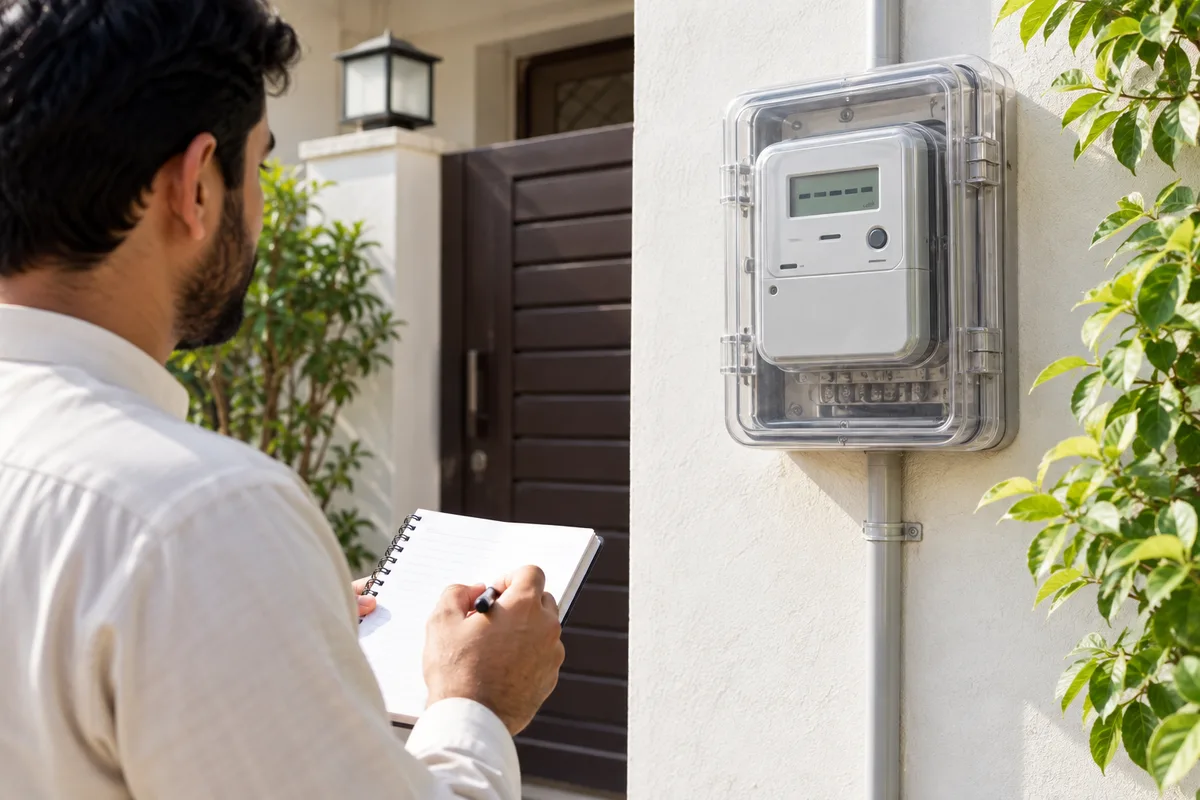
Write down the bill month, tariff code, sanctioned load, MDI if shown, fixed-charge rate, charged basis, and resulting amount. Then compare them with the applicable supplier tariff conditions.
If the bill shows the amount but not the basis, ask the company to provide the billed demand or load figure. Do not reverse-engineer a figure from the final total, because that total may include several unrelated charges.
Can reducing load reduce fixed charges?
A formal reduction may change a future charge if the applicable tariff and approved account update support that result. Simply switching off appliances or changing a number in a personal calculator does not amend sanctioned load.
Ask the supplier about eligibility, documentation, metering implications, effective date, and any other costs before applying. Have a qualified professional assess whether the proposed capacity remains suitable for the premises.
See our load-change preparation guide for the account questions to ask. If the property is empty, the zero-unit bill guide explains why other bill items can still remain.
When to question the amount
Request clarification when the tariff code, recorded load, or demand figure differs from the approved account record, or when the multiplication does not match the stated basis. Attach the approval and bill to the official complaint, and ask for a corrected bill if the supplier confirms an error.
Source: IESCO tariff guide and category conditions.
Frequently Asked Questions
What are electricity fixed charges?
They are charges separate from energy consumed. Their basis and rate depend on the applicable tariff category and conditions.
Are fixed charges calculated from monthly units?
Not necessarily. A load-based charge uses the specified load or demand measure rather than kWh. Match the measurement unit to the tariff.
What does MDI mean on the bill?
MDI concerns maximum demand recorded for the billing assessment. It is different from total energy used over the month.
Is MDI always equal to sanctioned load?
No. Sanctioned load is approved capacity, while MDI reflects a demand measurement. The tariff determines which measure or comparison forms the billed basis.
Does every domestic account use the same formula?
No. Check the specific category and whether TOU conditions apply. A formula copied from a different account may be unsuitable.
What does the cited IESCO guide say about non-TOU residential charges?
The checked guide uses sanctioned load as the basis under its stated conditions. Confirm the applicable version and account category before calculating an amount.
What does the cited IESCO residential TOU condition use?
It describes the higher of half the sanctioned load or MDI. This is a category-specific condition, not a nationwide rule for every connection.
Why should I read notes below the tariff table?
Those notes can define the billed basis, exceptions or minimum conditions. Reading only the rate can produce an incorrect calculation.
Are the example rupee amounts current tariff rates?
No. The article’s example numbers are invented to explain arithmetic. Use the applicable official tariff for an actual bill.
How should I check the calculation?
Record the category, period, rate and billed load or demand. Multiply the stated rate by the applicable basis, then compare that line item separately.
What if the bill does not show the billed basis?
Ask the supplier to provide the demand or load figure used. Dividing the entire bill total by a rate mixes unrelated items.
Can fixed charges remain when units fall?
Yes, depending on the tariff. A lower kWh total does not automatically reduce a charge based on approved load or a separate demand calculation.
Are minimum charges the same thing?
Not necessarily. A tariff may define minimum charges separately. Read the conditions and labels instead of treating every non-energy amount as a fixed charge.
Do solar panels automatically remove fixed charges?
No such automatic result is established here. Ask the supplier how your connection, tariff and solar arrangement affect each charge category.
Will switching off appliances reduce sanctioned load?
No. It changes actual use, not the approved account record. A formal supplier-approved change is needed to amend recorded load.
Can a formal load reduction lower future charges?
It may, if the tariff basis and approved change support that result. Check eligibility, effective date, costs and suitability before applying.
What if a completed load change is missing from the bill?
Provide the approval and effective date to the supplier. Ask which load should apply to the billed period and request correction where appropriate.
Should I subtract a disputed charge before paying?
Do not self-deduct without an official correction or payment instruction. Ask how the due date should be handled while the calculation is reviewed.
What records should accompany a complaint?
Include the bill, tariff category, recorded load, relevant approval and the calculation you question. Identify the specific disputed figure rather than only the final total.
Does a calculator prove that the supplier made an error?
No. Its result depends on the inputs and applicable conditions. Use it to identify a question, then confirm the supplier’s billed basis and records.
Related Guides
- Sanctioned Load Extension: Prepare an Electricity Connection Upgrade
- Zero Units but an Electricity Bill? Check These Charges First
- Peak and Off-Peak Units: Read a TOU Electricity Bill Correctly
Background reading: Electricity pricing on Wikipedia. This explains the general subject; the supplier records and source notes above govern account-specific checks.
Source review: 10 September 2026. Prepared with AI-assisted drafting and checked against the sources named in this guide. BijliBills is an independent information website. The supplier’s current bill, tariff notification, and account instructions take priority.