 Skip to content
A bill can show zero current units and still have an amount payable. Depending on the account and applicable tariff, the amount may include fixed or minimum charges, arrears, or adjustments for an earlier period. The correct question is which line items produced the total, not simply whether anyone stayed in the property.
Do not assume every charge on a zero-unit bill is valid. Check its basis against the account record and the applicable tariff conditions.
Separate current use from the balance
| Bill item | What to investigate |
|---|---|
| Current units | Whether the reading period actually records zero consumption |
| Fixed charges | Applicable tariff and load or demand basis |
| Minimum charge | Whether a minimum applies under the category conditions |
| Arrears | Earlier balance and any payment not yet reconciled |
| Adjustment | The earlier period, decision, or correction being applied |
The IESCO tariff guide, for example, includes minimum monthly charges under specified residential conditions where no energy is consumed and fixed charges are not applicable. That demonstrates why ‘no units means no bill’ is not a safe general rule. Use your own supplier’s current conditions for the actual amount.
Check whether the bill really says zero
An empty home and a zero-unit bill are not the same thing. Refrigeration, security equipment, pumps, standby devices, or other authorized loads may still be operating. There may also be a reading or account issue that needs investigation.
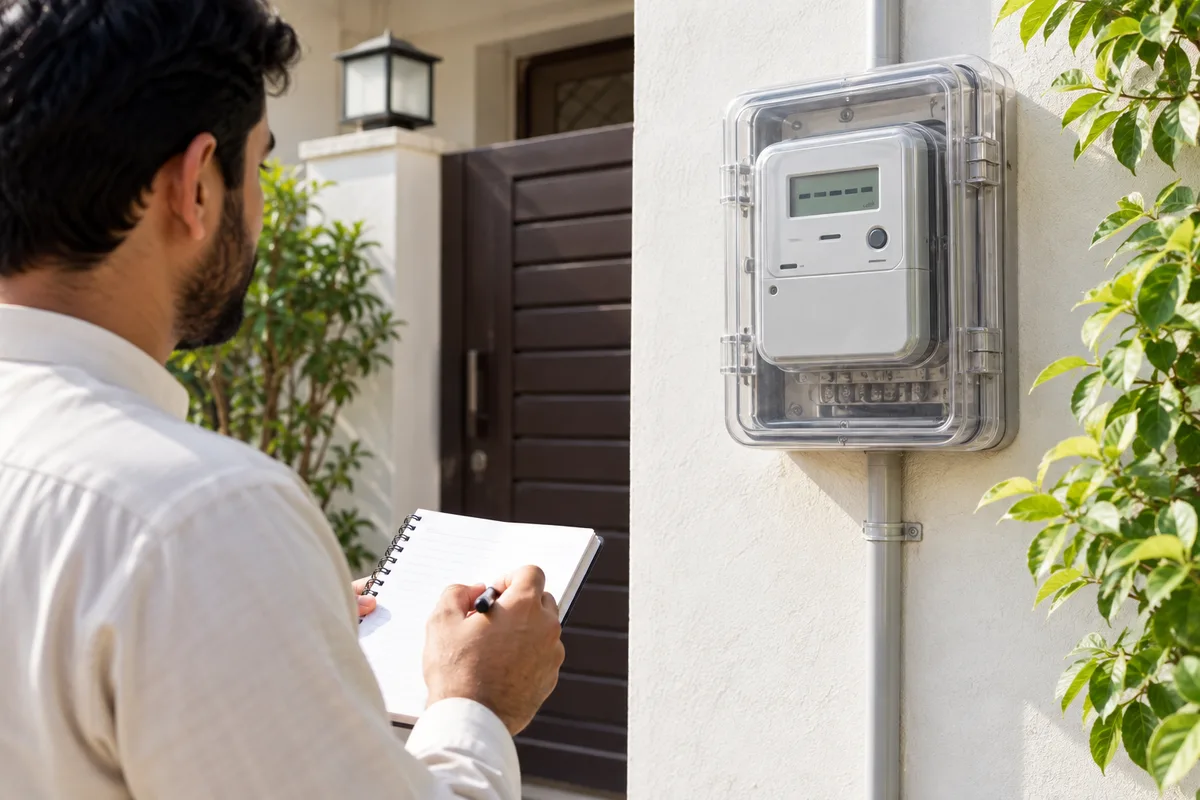
Compare the previous and current readings and their dates. For a safely accessible meter, record the display without touching the installation. If you cannot identify the correct register, ask the supplier rather than guessing from whichever number appears first.
Do not open meter seals or electrical panels to test the situation yourself.
Follow the arithmetic line by line
Imagine a purely illustrative bill with zero energy charges, Rs 300 in a valid account charge, and Rs 700 of earlier unpaid balance. The payable amount would be Rs 1,000 before considering any other entries. Paying attention only to the zero energy line would miss the source of the balance.
Now suppose the Rs 700 was already paid. That becomes a payment-reconciliation question, not a dispute about current units. Match the receipt to the supplier record using our paid-status guide.

A property that will stay vacant
Ask the supplier what formal options exist for your connection and what their conditions are. Switching off appliances does not itself close an electricity account or guarantee that recurring account charges stop.
Before requesting a temporary disconnection or another account change, ask about outstanding dues, reconnection procedure, charges, security equipment, and the effect on any connected solar arrangement. Obtain the current requirements in writing; do not rely on a neighbour’s case from a different year or tariff.
When the amount needs correction
Send the company the bill month, tariff category, reading details, and the specific line you dispute. If it is an old balance, attach the relevant receipt. If it is a fixed-charge issue, include any load-change approval. Ask the company to explain the calculation and issue a corrected document where appropriate.
A complaint does not automatically suspend the due date. Request payment instructions while the case is being reviewed.
Our fixed-charge explainer covers load and demand calculations. The bill history guide helps separate current use from older charges when a property has been unoccupied for several months.
Sources: IESCO tariff conditions, PITC complaint service.
Frequently Asked Questions
Can a zero-unit bill still be payable?
Yes. Depending on the account, fixed or minimum charges, older balances and adjustments can remain even when current recorded units are zero.
Does zero consumption prove every other charge is correct?
No. Each charge still needs a valid basis. Ask which tariff condition or account entry produced the amount.
Is an empty property always using zero electricity?
No. Refrigeration, pumps, security equipment or standby devices may still operate. There can also be a reading issue that needs investigation.
Which line should I check first?
Check the current units and reading dates, then separate energy charges from fixed charges, arrears and adjustments. The final total alone cannot identify the cause.
Can an earlier unpaid balance appear?
Yes. Arrears relate to earlier account balances rather than current consumption. Match them against earlier bills and completed receipts.
What if I already paid the arrears?
Keep the complete receipt and ask the supplier to reconcile the payment. Check the payment account, date and transaction outcome before assuming a current-unit error.
Can an adjustment relate to an earlier month?
Yes. Ask which period and decision or correction the adjustment covers. Zero current use does not by itself establish the earlier-period basis.
Do minimum monthly charges always apply?
No universal rule is stated here. The cited tariff includes specified conditions; use the conditions for your actual supplier and category.
Are minimum and fixed charges automatically added together?
Do not assume that. Read the tariff conditions to see which applies to the account and whether any exclusions or minimum rules operate.
How can I check the meter safely?
Observe an accessible display without touching equipment. Record the date and relevant register only if safe; ask the supplier when the display meaning is unclear.
Should I open the meter to check for consumption?
No. Do not break seals, open enclosures or handle wiring. Report suspected meter or installation problems through the appropriate professional channels.
What if readings are identical but units are charged?
Ask for the full calculation, including any multiplying factor, assessment or correction. Keep the bill and reading evidence rather than guessing the reason.
Does turning off appliances close the account?
No. It does not itself terminate the connection or stop every account-related charge. Ask about the supplier’s formal options for a vacant property.
Should I request temporary disconnection?
Discuss the available terms with the supplier first, including dues, reconnection requirements and equipment needs. Suitability depends on the property and connection.
What if security equipment must stay powered?
Include that requirement when discussing account or supply changes. Do not assume a complete disconnection is suitable for every vacant property.
Could a solar arrangement affect the decision?
It may add account and technical considerations. Ask the supplier how a proposed disconnection or change affects the approved arrangement.
Does a complaint suspend the due date?
Not automatically. Request written payment instructions or a corrected bill while the disputed amount is reviewed.
What evidence helps with an incorrect fixed charge?
Supply the bill, tariff details and any approved load change relevant to the period. Ask for the rate and load or demand basis used.
Should I compare several months of bills?
Yes. A short history helps separate recurring charges from one-off adjustments and reveals whether an old payment remains unreconciled.
Can BijliBills confirm my zero-unit balance is valid?
This guide cannot inspect your private account ledger. It helps organise the questions and evidence for the supplier to confirm or correct the amount.
Related Guides
- Electricity Bill Fixed Charges: Sanctioned Load and MDI Explained
- Electricity Bill Paid Status: What Counts as Payment Confirmation?
- Electricity Bill History: Find Previous Months and Keep Better Records
Background reading: Electricity pricing on Wikipedia. This explains the general subject; the supplier records and source notes above govern account-specific checks.
Source review: 10 September 2026. Prepared with AI-assisted drafting and checked against the sources named in this guide. BijliBills is an independent information website. The supplier’s current bill, tariff notification, and account instructions take priority.