 Skip to content

Request an electricity meter accuracy test when you have a reason to question how the meter measures consumption. Start by ruling out a wrong reading, an unfamiliar bill adjustment or a mismatch between the meter and your account. A high rupee total alone does not establish that the meter runs fast.
A formal meter challenge asks the electricity company to check the equipment through its authorized procedure. Prepare the bill history and a short explanation, obtain the current test instructions, and keep the written result with any later billing adjustment.
Separate an accuracy concern from a reading error
Write down what seems wrong before choosing a complaint category. These problems need different checks:
| What you noticed | What to request first |
|---|---|
| The billed reading differs from a dated photograph | Verification of the recorded reading and its date |
| The units look familiar but the amount is higher | An explanation of charges, adjustments and any earlier balance |
| Recorded consumption seems implausible across several periods | A review of the readings and whether a formal accuracy test is appropriate |
| The meter was recently changed | The old and new meter records and the calculation covering both periods |
A wrong meter reading complaint can address a transcription or account-record problem without proving an equipment fault. For a broader electricity overbilling concern, compare billed units, the reading period, charges, adjustments and any earlier balance separately.
Comparing your bill with a neighbour’s is weak evidence of accuracy. Their usage, billing period and account details may differ. Your own dated records give the company a clearer issue to investigate.
Prepare the evidence before requesting a test
Make one folder containing the current bill, relevant earlier bills, the account identifier and the meter number shown on each record. Note any meter change, estimated reading or change in occupancy during the disputed period.
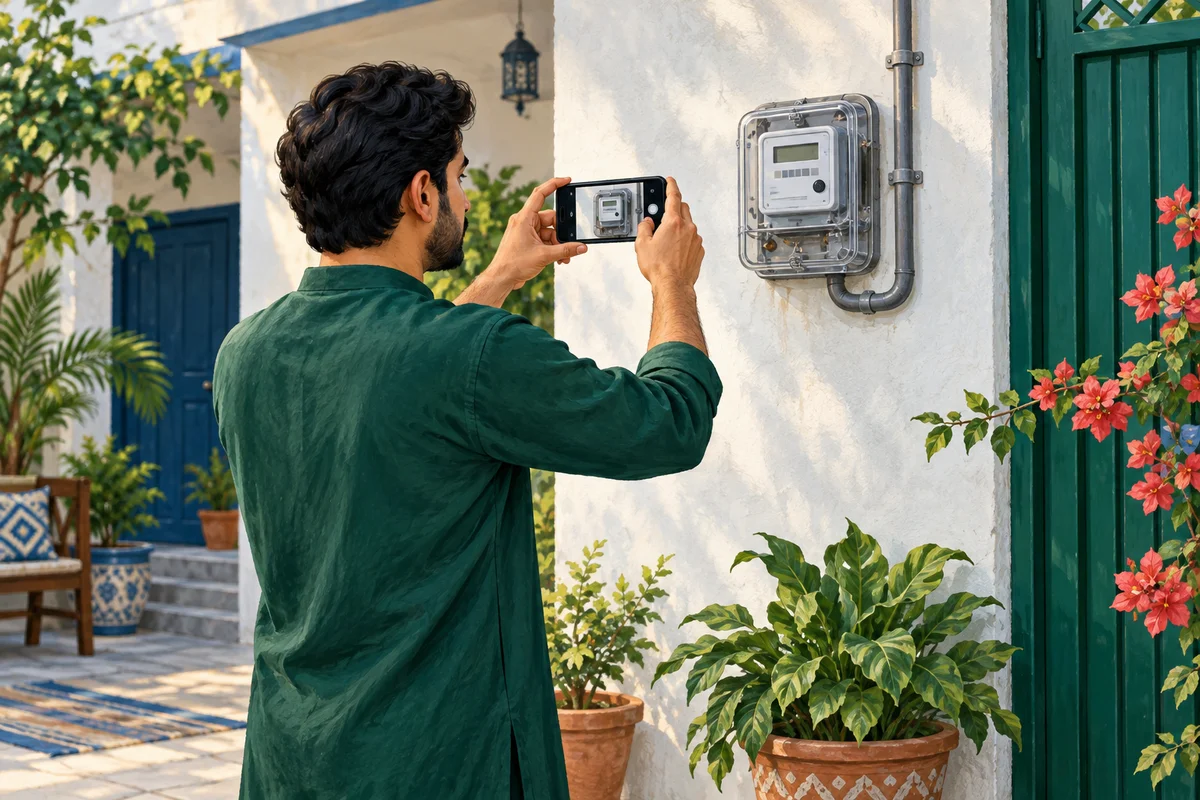
If the display is safely visible from ground level, a dated photograph may help identify the register and reading. A photograph taken today records today’s display; it cannot prove what the meter showed on an earlier reading date.
Add a brief usage note where relevant: for example, when an air conditioner began regular use or when the property was empty. Describe what you know rather than estimating an exact saving from memory.
Do not open the meter enclosure, disturb seals, attach testing equipment or ask someone to bypass the meter. Damaged equipment, sparks, burning smells or exposed wires require the supplier’s emergency route. Stay clear instead of approaching for a photograph.
Ask for the current meter challenge procedure
Section 4.3.4 of the Consumer Service Manual hosted by IESCO, updated through 26 November 2025, describes a paid meter challenge and authorized testing in the consumer’s or representative’s presence. Section 4.3.5 addresses an Electric Inspector/POI accuracy-review route.
That edition lists a challenge fee of Rs. 500 for single-phase and Rs. 1,000 for three-phase connections, with checking within seven working days after payment. These are the cited manual’s provisions; confirm the applicable current instructions before paying.
Ask your supplier which procedure applies, the official payment method, the test appointment arrangements and when to expect a written result. Confirm any later amendment through the supplier and NEPRA’s legal documents index. A fee copied from an older guide is not your payment instruction.
You can adapt this private request: “Please review the accuracy concern for meter [number], account [reference]. The attached bills cover [period], and my concern is [specific observation]. Please provide the applicable meter challenge procedure, official payment instructions and arrangements for witnessing the test.”
Keep the acknowledgment and payment receipt together. Ask how the payment will be associated with the test request. Avoid paying an intermediary for an informal electricity meter defect test.

Read the test result and bill correction together
Ask for a result that identifies the tested meter, test date, finding and recorded error, where applicable. Check that it addresses your meter rather than a neighbouring installation or an earlier device.
For any adjustment, request the affected billing periods and calculation. Keep these questions separate: what did the test establish, what action was taken on the meter, and how was the account changed?
A request does not guarantee a refund. The manual addresses both fast and slow meters, so a test can have different billing consequences. If the equipment is replaced, use the meter replacement reading checklist to preserve the old closing and new opening records.
If the bill is due while the case is open, ask for written payment instructions. Do not assume the complaint suspends payment or authorizes you to deduct your own estimate.
Follow up an unresolved test
Use the original reference and identify the missing outcome: no appointment, no report, or an unexplained adjustment. A closure message saying “resolved” should be checked against what you requested.
For a continuing dispute, ask the supplier about the next review route and check NEPRA’s current complaint instructions. Retain any earlier decision. Our PITC complaint-tracking guide explains how to maintain the case record where that service covers your supplier.
Frequently asked questions
Does a high bill prove the meter is fast?
No. Compare the billed units, reading period and charges first. An accuracy finding needs the authorized test process.
Can an appliance experiment prove meter accuracy?
A home usage estimate is not a calibrated meter test. Do not touch meter wiring or seals to investigate.
Can someone attend the test for me?
Ask the supplier what authorization your representative needs and confirm the appointment details before the visit.
Will the challenge fee or old bills be refunded?
Do not assume either outcome. Ask for the applicable fee treatment and any billing decision in writing.
What if only one reading is wrong?
Request a reading review with the relevant bill and dated evidence. Explain separately if you also suspect a measurement fault.
Editorial note and sources
Prepared and reviewed 1 October 2026. Independent, AI-assisted guidance, not an official company service or a report of a personally completed test. Request wording is illustrative. Confirm current instructions with your supplier.
Primary references: Consumer Service Manual, November 2025 edition, sections 4.3.4 and 4.3.5; NEPRA legal documents. The manual’s edition date is not a guarantee that no later amendment applies.