 Skip to content
K-Electric’s published peak hours are 6:30 pm to 10:30 pm from April through October, and 6:00 pm to 10:00 pm from November through March. The other 20 hours are off-peak. These windows matter to accounts billed under a time-of-use tariff, not automatically to every electricity consumer in Karachi.
The schedule is published in K-Electric’s FAQs and its three-phase meter specification. Check your current bill and any later company notice before making a price calculation.

Karachi’s two seasonal windows
| Season | Peak hours | What to check |
|---|---|---|
| April to October, inclusive | 6:30 pm to 10:30 pm | Do not apply another DISCO’s summer schedule. |
| November to March, inclusive | 6:00 pm to 10:00 pm | Update household reminders at the seasonal change. |
IESCO and K-Electric do not publish the same seasonal table. A generic image labelled ‘Pakistan peak hours’ can therefore send a Karachi household in the wrong direction.
First establish whether your account uses TOU
Look for separate peak and off-peak consumption on the bill and check the tariff code. K-Electric’s FAQ describes the relevant TOU customers as having sanctioned load of 5 kW or above and three-phase meters. Your actual tariff category and applicable notification still control the bill; do not decide eligibility solely by counting wires or looking at the meter casing.
For current prices, follow the K-Electric tariff structure. This timing guide deliberately does not present an old per-unit price as today’s universal rate.
Compare the same amount of electricity
Imagine you can move a task using 1.5 kWh out of the peak window. If the difference between your applicable peak and off-peak rates is Rs 8 per kWh, that shift reduces the energy charge by Rs 12. This is an arithmetic example, not a quotation of K-Electric’s current tariff.
The calculation is:
Shifted kWh x difference between the two applicable rates.
The number of hours alone is not enough. A small light used for an hour and a high-power appliance used for an hour do not consume the same energy. Fixed charges and unrelated adjustments also do not disappear because a task moved to another time.
A routine that does not disrupt your evening
Start with one flexible activity, such as ironing or an appropriate washing-machine cycle. Choose a time that is convenient and safe. Keep necessary cooling, medical devices, and other essential loads available when needed.
Write the seasonal window beside the task in your household plan. Review the next full bill rather than judging success from a single day. Weather, occupancy, billing days, and appliance use can all change the monthly total, so a lower total alone does not prove the schedule caused the saving.
Peak units look wrong: what evidence helps?
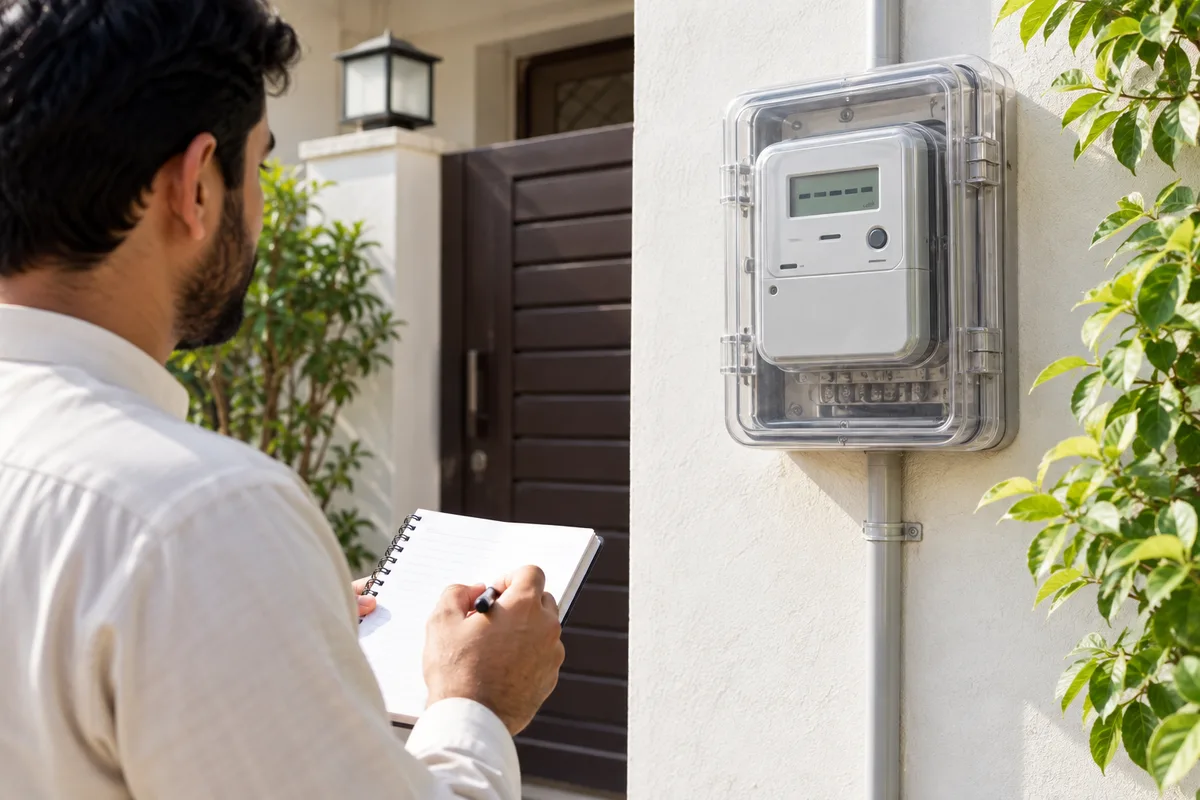
Keep the bill, a dated photograph of the relevant meter display taken from a safe position, and a short description of the discrepancy. Compare the same register on successive readings. Do not confuse cumulative meter totals with the units billed for one month.
Ask K-Electric to check the register mapping or clock if those details look inconsistent. Do not change meter settings yourself. For understanding the arithmetic, see our guide to peak and off-peak units.
Sources: K-Electric FAQs, K-Electric meter timing specification.
Frequently Asked Questions
What are K-Electric’s published peak windows?
The schedule referenced here gives 6:30 pm to 10:30 pm for April to October and 6:00 pm to 10:00 pm for November to March. Verify later changes with KE.
Is the Karachi schedule identical to IESCO’s?
Do not assume that. Check the supplier-specific schedule and your tariff instead of copying another company’s seasonal timetable.
Does the summer window include September?
September falls within April to October in the referenced KE schedule. Confirm the current timetable if your bill or meter information appears inconsistent.
Does every K-Electric customer have TOU rates?
No. Applicability depends on the account and tariff conditions. Check the tariff category, sanctioned load and separate consumption registers rather than relying on location alone.
Where should I check my account category?
Read the tariff and load details on your latest bill. KE can confirm the category when the printed abbreviations or account history are unclear.
What is the difference between timing and price?
Timing determines which consumption period applies; the tariff determines the rate. A familiar timetable does not prove that a rate quoted last year is still current.
Do peak units include everything used that evening?
They should correspond to the consumption recorded under the applicable peak register and configuration. Do not estimate them from one appliance without accounting for the rest of the property.
Can I move laundry to off-peak hours?
You can consider it if the task is flexible and your tariff has a lower off-peak rate. Keep normal appliance safety and supervision requirements in place.
Should I turn my refrigerator off during peak hours?
Do not compromise food safety to chase a tariff saving. Choose flexible tasks rather than interrupting essential or temperature-sensitive equipment.
Will an inverter AC make peak electricity free?
No. An efficient appliance can change consumption, but applicable units are still billed. Actual use depends on operating conditions, settings and running time.
How can I calculate a timing-related saving?
Compare the energy charge for the same number of units at the two rates printed on your current bill. Keep fixed charges and other bill items separate.
Why is my total bill high despite fewer peak units?
Check off-peak use, fixed charges, adjustments, arrears and taxes. One lower consumption category does not establish that every part of the total should fall.
Can I add peak and off-peak readings directly?
Add the units consumed over the same period, not unrelated cumulative displays. First calculate each register’s change and check any applicable multiplier.
What if my meter display cycles too quickly?
Observe from a safe position and record the labels with dated photos if possible. Ask KE which display codes correspond to the billed registers.
What if the meter time looks wrong?
Record what you observed and contact KE for a configuration check. Do not open the meter or attempt to change its clock.
Do public holidays automatically change the schedule?
Do not assume an exemption or different timetable without a supplier instruction applying to your tariff. Follow the current published conditions.
Does the bill’s issue date define my consumption period?
Not by itself. Compare the previous and current reading dates to understand the interval covered by the units on that bill.
Can I use an online calculator as proof of an error?
Use it as a check, not final proof. A useful complaint identifies the bill, registers, rates and calculation that you want KE to explain.
Are the example rates in this article official?
No. Any hypothetical example is for arithmetic only. Use the applicable notification and your own bill for real prices.
What records should I keep month to month?
Keep each bill, separate payment receipt, tariff details and notes about material changes in use. This makes comparisons more useful than comparing totals alone.
Related Guides
- Peak and Off-Peak Units: Read a TOU Electricity Bill Correctly
- K-Electric WhatsApp Bill Service: Number, Duplicate Bill, and Safety
- Electricity Bill Fixed Charges: Sanctioned Load and MDI Explained
Background reading: K-Electric on Wikipedia. This explains the general subject; the supplier records and source notes above govern account-specific checks.
Source review: 10 September 2026. Prepared with AI-assisted drafting and checked against the sources named in this guide. BijliBills is an independent information website. The supplier’s current bill, tariff notification, and account instructions take priority.